About Alyx Sherwood

Helping people understand complicated ideas, make better decisions, and communicate them in ways that inspire action.
My Philosophy
I've spent my career in industries that appear very different on the surface—broadcast media, manufacturing technology, enterprise SaaS, and higher education. I discovered they all ask the same question.
How do we help people understand something new?
Whether introducing Industry 4.0 technology to manufacturers, explaining AI to business leaders, helping students become better communicators, or creating campaigns that connected organizations with their communities, I've discovered that the greatest barrier to progress is rarely information. It's understanding.
That's why every role I've accepted has centered on one purpose: Helping people understand complicated ideas, make better decisions, and communicate them in ways that inspire action.
Areas of Expertise
Align People
Bringing executives, customers, marketing, sales and product teams around a shared understanding.
Create Understanding
Teaching through storytelling, education and practical frameworks.
Inspire Action
Creating communication that changes decisions—not just opinions.
Simplify Complexity
Making technical products, AI and emerging technologies easier to understand.

By the Numbers
15+ Years
Leading communications and marketing initiatives
70+
Website pages built across two SaaS organizations
20+
Manufacturing technologies pages launched
9 Years
University instructor with 25-50 students taught each semester
100+
Sweepstakes, photos contests, and quiz promotions campaigns
$650K+
Annual sponsorship programs managed in broadcast media



Experiences that Shaped My Perspective
Broadcast & Strategic Communications
I spent fifteen years in broadcast media discovering that great communication isn't just about creating compelling content—it's about aligning people with different priorities around a common goal.
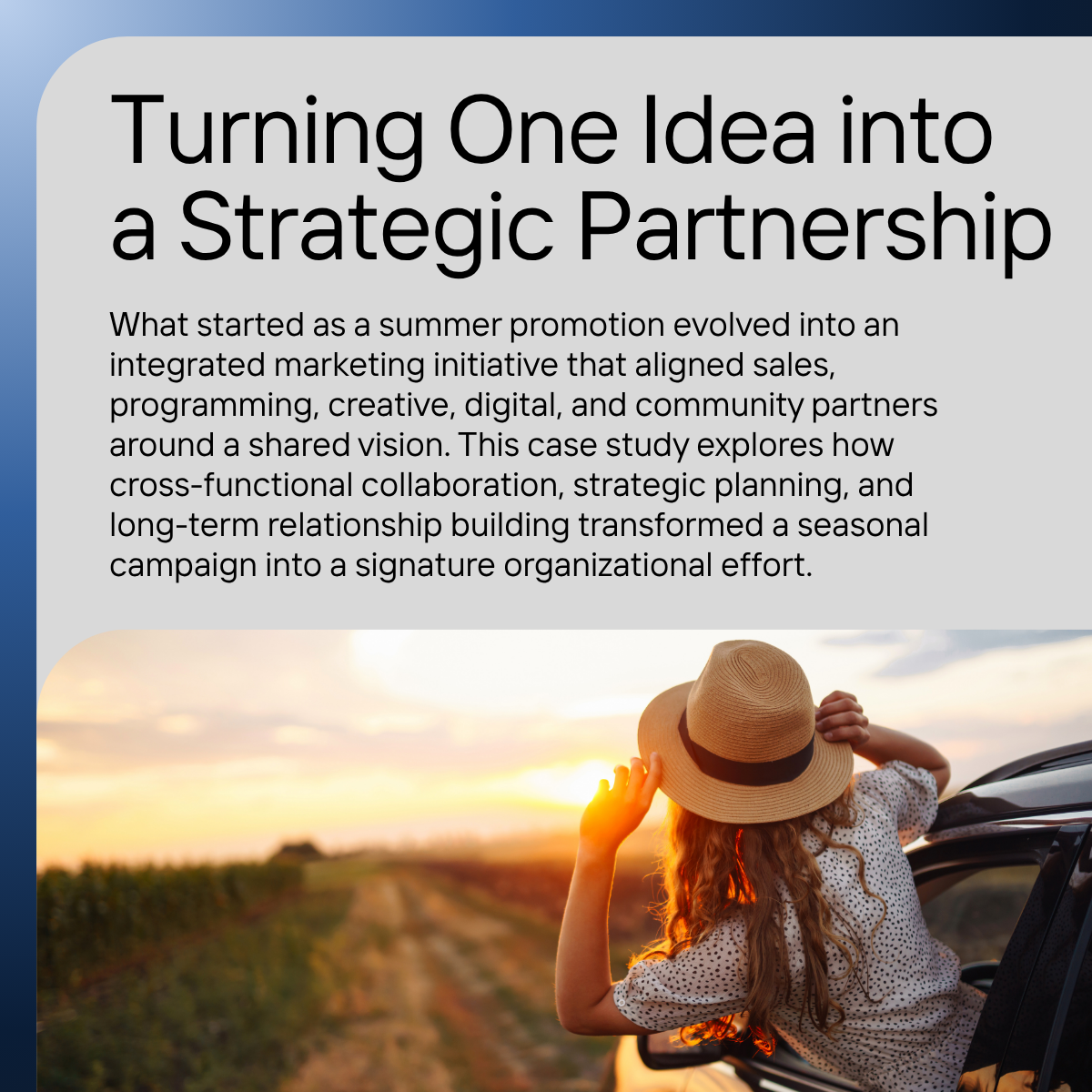
At Sinclair Broadcast Group, I held one of the company's first Sales Promotions Coordinator roles, serving as the bridge between sales, news, promotions, creative services, legal, and digital marketing. Every sponsorship required balancing business objectives with journalistic integrity, coordinating cross-functional teams, developing promotional concepts, writing creative briefs, producing campaigns, and measuring results for clients. I also supported digital advertising strategy, helping sales teams identify the right solutions for customers and managing campaign execution from concept through reporting.
Earlier in my career with iHeartMedia and Chadwick Bay Broadcasting, I gained experience in radio production, commercial writing, promotions, operations, and live broadcasting. Those experiences taught me that communication succeeds when every stakeholder understands both the message and their role in delivering it.
Educator
For nearly a decade, I have taught Business Communication, Public Speaking, Technical Writing, Branded Content, and Mass Communication at SUNY Geneseo. While teaching began as an opportunity to share my professional experience with students, it quickly became one of the most rewarding parts of my career.
Rather than relying on traditional textbooks, I designed my courses around real-world communication challenges that students would encounter in their careers. Classroom exercises evolved into interactive experiences, including speed-dating style networking interviews, mock job interviews modeled after professional hiring processes, and Shark Tank-inspired business proposal presentations. Every assignment was designed to help students think critically, communicate clearly, and gain confidence in applying what they learned beyond the classroom.
Teaching fundamentally changed the way I approach marketing and leadership. Students rarely struggled because they lacked intelligence—they struggled because no one had explained the concept in a way that connected with them. That realization continues to shape my professional philosophy today. Whether communicating with executives, customers, or cross-functional teams, I believe understanding always comes before persuasion. My role is not simply to deliver information, but to create clarity that allows people to make better decisions.
Marketing Leadership & Digital Transformation
My transition into enterprise SaaS and manufacturing technology allowed me to apply the same communication principles to organizations navigating rapid growth, digital transformation, and increasingly complex technologies.
As Digital Marketing Manager for Mingo Smart Factory—and later Nulogy following its acquisition—I helped translate advanced manufacturing concepts, Industry 4.0 technologies, predictive maintenance, factory analytics, and supply chain solutions into stories that customers could understand and act upon. My work expanded beyond traditional marketing to include website strategy, SEO, executive thought leadership, webinars, podcasts, customer case studies, product messaging, and integrated digital campaigns that connected technical innovation with measurable business outcomes.
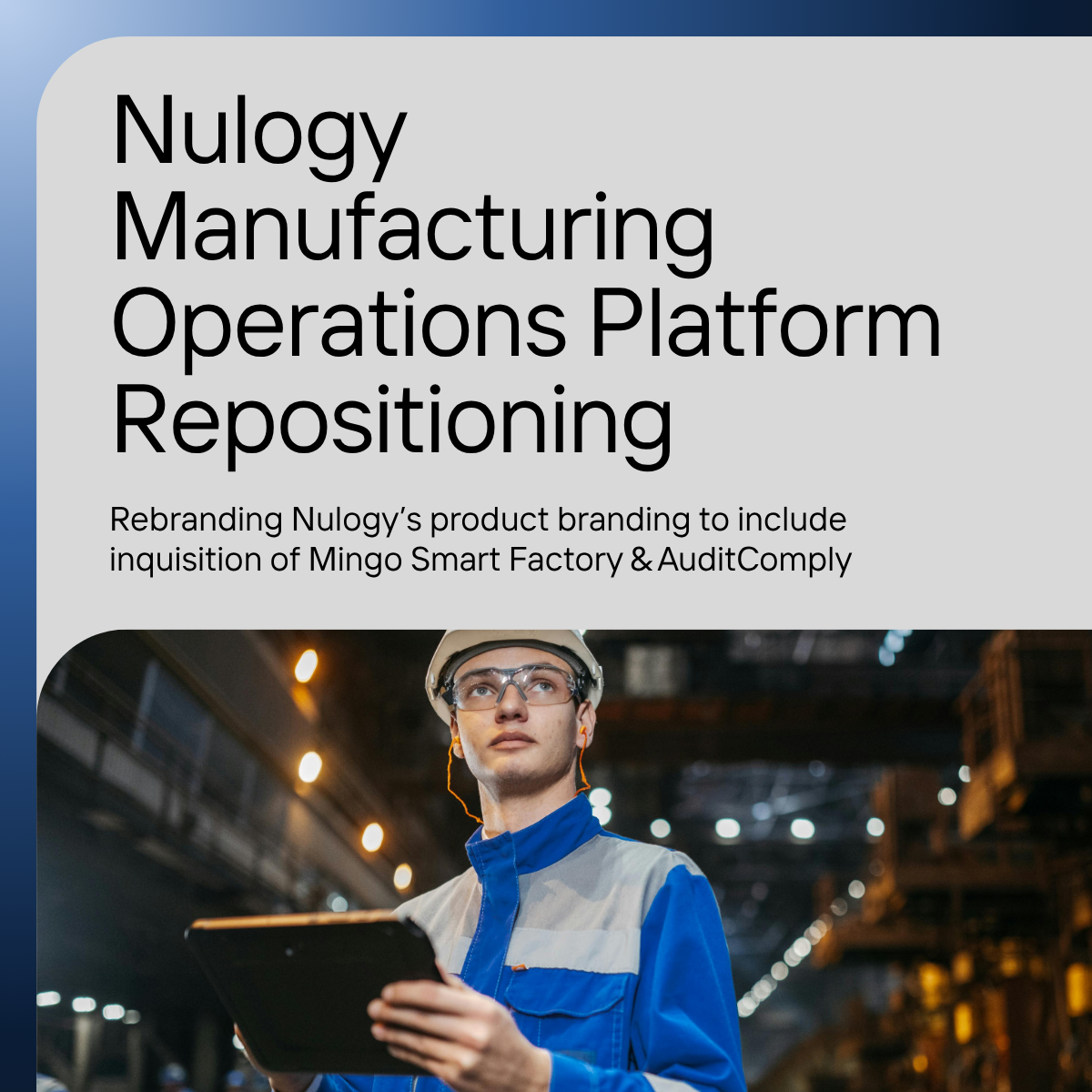
Following Nulogy's acquisition of Mingo Smart Factory and AuditComply, I played a key role in repositioning the company from a supply chain software provider into a Manufacturing Operating System platform. That transformation required far more than a new website or updated messaging. It required aligning multiple product teams, executives, sales, and customers around a shared understanding of how the combined platform created greater value than its individual products alone.
During a company-wide restructuring, I also assumed responsibility for website governance, HubSpot administration, marketing automation, and digital engagement strategy while continuing to support executive communications and thought leadership. Working across product, sales, customer success, and executive leadership reinforced that the most successful marketing organizations don't simply promote products—they help organizations navigate change.
Today, that perspective has naturally expanded into AI. As businesses race to adopt new technologies, I believe the greatest opportunity isn't explaining how AI works—it's helping organizations understand how to use it responsibly, strategically, and with better data.
Writer, Speaker & Lifelong Learner
Writing has become the place where every chapter of my career comes together.
Through Story Behind the Strategy, I explore communication, leadership, marketing, AI, and decision-making by connecting real-world business challenges with lessons drawn from history, popular culture, books, and everyday experiences. The goal isn't simply to comment on marketing trends, but to help readers see familiar problems from a different perspective and leave with ideas they can immediately apply in their own organizations.
That same philosophy shapes my work as a speaker. Every presentation I deliver is designed to challenge assumptions, simplify complicated ideas, and provide practical frameworks that audiences can use long after the session ends. Whether speaking about communication, organizational change, storytelling, AI adoption, or leadership, my goal is always the same: help people understand something more deeply than they did when they walked into the room.
Highlights include keynote presentations at the annual Second Street Conference on organizational alignment, alongside presentations for marketing professionals, higher education, and executive audiences.
Looking ahead, I'm building a broader educational platform that combines writing, speaking, and practical learning experiences for professionals who want to become stronger communicators and more effective leaders. It's a natural extension of everything I've learned throughout my career—bringing together executive marketing, higher education, and strategic storytelling into a single body of work dedicated to helping others communicate with greater clarity and confidence.
Trusted By


Questions I Keep Coming Back To
-
How do we make complicated ideas easier to understand?
-
Why do some messages change behavior while others are forgotten?
-
How can technology make people more human, not less?
-
What story is this strategy really trying to tell?
-
What would make this easier for someone else to understand?
How I Work
How do you turn complex products and technology into clear customer messaging?
I start with the problem the customer is trying to solve, not the features the product team wants to promote. Throughout my work in enterprise SaaS and manufacturing technology, I’ve found that complex products become easier to understand when messaging connects technical capabilities to situations customers already recognize. At Mingo Smart Factory, that meant turning Industrial IoT, production monitoring, and manufacturing analytics into stories about downtime, productivity, maintenance, and decisions on the factory floor. At Nulogy, the challenge expanded to creating consistent messaging across five enterprise SaaS product lines following two acquisitions.
My communication background plays an important role in that process. I ask what the audience needs to understand, why it matters to them, and what information they need next. The goal isn't to make sophisticated technology sound simple. It's to make its business value clear without sacrificing accuracy.
How do you approach product positioning and go-to-market strategy?
I approach product positioning by finding the intersection between what a product does well, what customers genuinely need, and what differentiates it in the market. That requires collaboration. I want perspectives from Product, Sales, Customer Success, subject-matter experts, executives, and customers before deciding which story marketing should tell.
At Mingo Smart Factory, I partnered directly with executive leadership while shaping go-to-market strategy and positioning for an evolving Industrial IoT SaaS platform. At Nulogy, the challenge became larger: helping unify messaging across five enterprise SaaS product lines following two acquisitions.
Once the positioning is established, consistency matters. Website copy, sales enablement, webinars, campaigns, thought leadership, customer stories, and executive communications should reinforce the same core narrative while adapting it for different audiences and stages of the customer journey. Good positioning gives an organization a shared language for explaining why it matters.
How do you lead cross-functional marketing initiatives when you don't directly manage every stakeholder?
Cross-functional leadership starts with making the shared objective clear. People don't need to report to Marketing to become strong marketing partners; they need to understand what we're trying to accomplish, why their expertise matters, and what they own.
I've worked this way throughout my career. At Sinclair Broadcast Group, integrated campaigns required coordination across Sales, News, Creative, Production, Digital, Programming, advertisers, and community organizations. Later, enterprise SaaS initiatives required close collaboration with Product, Sales, Customer Success, executives, and technical subject-matter experts. My Nulogy work, for example, required aligning stakeholders around unified messaging across five product lines following two acquisitions.
My role is often to create structure around that collaboration: establish the story, clarify responsibilities, translate between specialized teams, keep decisions moving, and make sure the final customer experience feels cohesive. Influence comes from creating clarity and making it easier for people to contribute their expertise.
How do you use data to make marketing decisions?
I use data to make decisions, not to make reports look impressive. One of the most important lessons I've learned is that the biggest number isn't necessarily the most useful one. I want to understand what a metric tells us about customer behavior and what action we can take because of it.
That philosophy has followed me across industries. In broadcast marketing, I shifted campaign reporting away from inflated database totals toward engaged audiences and recent activity. At Mingo Smart Factory, I standardized lead-quality measurement, tracked marketing-qualified inbound opportunities, managed more than $36,000 in annual Google and Bing investment, and presented GTM and website performance to the CEO. At Nulogy, I built executive dashboards informing monthly budget allocation and partnered with the CFO on controlled investment analyses.
Good analytics should create clarity. If a metric doesn't help us understand performance, test an assumption, or make a better decision, I question why we're prioritizing it.
How do you build trust with customers, clients, and internal stakeholders?
I build trust by being transparent, setting realistic expectations, and following through—even when the easiest answer isn't necessarily the most comfortable one.
One of my favorite examples came from my years in broadcast marketing. A longtime sponsor unexpectedly had to close its location and asked us to temporarily hold a valuable sponsorship while it determined whether it could reopen. My account executive and I honored that request for six months. When a prospective advertiser later asked why such a valuable sponsorship was available, we explained exactly what had happened rather than giving them a more convenient sales answer. That honesty helped establish the relationship.
The advertiser initially invested $800 per month. Over the next several years, the relationship expanded into multiple sponsorships totaling $4,000 in recurring monthly revenue.
That experience reinforced something I still believe: trust isn't a soft marketing metric. It's a business asset. Strong relationships grow when customers and colleagues know that what you tell them can be believed.
What role should storytelling play in product marketing?
Storytelling gives product marketing context. Features explain what a product can do; stories help customers understand why those capabilities matter in their world.
My perspective comes from an unusual combination of experiences. I spent years working in radio and television, taught public speaking and business communication to hundreds of undergraduate students, and later moved into product positioning and go-to-market strategy for enterprise SaaS. Across each of those environments, the underlying communication challenge has been remarkably similar: understand the audience, identify what matters to them, and organize information into a narrative they can remember and act upon.
In product marketing, I particularly value customer stories because they put technology into context. A dashboard isn't the story. The decision someone could finally make because of what the dashboard revealed is the story. The best product storytelling doesn't make the company the hero. It helps customers recognize themselves in the problem—and understand how they can solve it.
How do you use AI in marketing without losing human judgment?
I treat learning as a continuous project. My perspective on AI is built on understanding both the technical capabilities and the strategic implications. I regularly experiment with new tools, follow researchers and practitioners, and translate those insights into frameworks my clients and students can use. Staying current isn't just about knowing what's new; it's about understanding how it affects the way we communicate and solve problems.
I view AI as an accelerator for human expertise, not a replacement for it. I use AI-assisted marketing to explore ideas, organize research, identify patterns, challenge assumptions, improve workflows, and consider how content may be discovered through AI search. My broader digital work also includes SEO, AEO/GEO, marketing automation, HubSpot, and Salesforce.
But speed isn't the same as judgment. AI doesn't inherently know which customer insight matters most, whether positioning reflects the actual product, which stakeholder perspective is missing, or whether a technically correct statement will resonate with the audience. Those decisions still require subject-matter expertise, curiosity, verification, and human context.
That distinction also shapes my perspective on AI adoption more broadly: sophisticated tools are only as useful as the information and strategic thinking underneath them. I don't ask AI to replace the thinking. I use it to create more time and capacity for better thinking.
Beyond Work

Outside of work, you'll usually find me trail running, planning my next marathon, exploring a national park with my family, or reading books that somehow end up becoming the inspiration for my next Story Behind the Strategy article.
Running has taught me many of the same lessons I bring into my professional life: progress comes from consistency, difficult goals are achieved one step at a time, and the best journeys are rarely completed alone.
I've completed fourteen marathons, including five of the six Abbott World Marathon Majors, and hope to complete the final race in Tokyo. Some of my favorite memories, however, haven't come from finish lines—they've come from the conversations, cultures, and perspectives I've experienced along the way.
When I'm not writing, speaking, or building communication strategies, you'll probably find me chasing my son Tobias through the backyard, reading a new marketing book, or searching for the next story worth sharing.
Let's Talk
Whether you're searching for a marketing executive to lead brand transformation, product marketing, strategic communications, or organizational growth, planning a speaking engagement, or interested in being featured on Story Behind the Strategy, I'd love to connect. Complete the contact form, and I'll be in touch soon.